LightbringerBreaking the Halo
A card game for drafters, where drafting is the mechanic, not the theme. Built from the world of the Lightbringer series: the spectrum, the halo, and a war fought with light.
Working title · Concept pitch · October 2026
Drafting: where the books and the game meet
In the Seven Satrapies, turning light into luxin is called drafting. At a card table, drafting means choosing your cards. This game makes them the same act. Every turn you draw three and keep one, and when you want more than that, you reach into your halo for it.
The halo is a ring of cards, so it can fill and break in front of everyone. The colours behave the way Brent wrote them. None of it was invented for a game. It was already on the page.
A card game of drafters at war, played one round of light at a time
Flip a colour card. Its light is what every unit can draft this round, and its text says who wins it.
Draw three, keep one, discard two. That's your draft for the round.
Trade actions one at a time. Field units, attack, cast, or reach into your halo for more.
Settle the round. Whoever met the colour card's condition claims it into their deck.
Bring the other drafter down. Their health runs out, or their halo breaks and they can't finish you that turn.
There's no commander card
The player is the drafter, with their own health and their own halo. The characters of the series are cards you bring into the war.
Decks start small and grow
Every colour card you win joins your deck, so the deck you finish with is never the one you started with.
Your halo is a ring of five cards, and everyone can watch it break
At setup, your deck sits in the middle of a ring of five face-down cards. That ring is your halo, and it's the extra power every drafter is tempted by.
Reach for more
Pull up to two cards from your halo on any turn, blind. It's power beyond your one-card draft.
It refills from the middle
Every gap is filled at once from the deck inside the ring, so the deck you stand on thins with every pull.
Then it breaks
When your deck can't refill the ring, your halo breaks. Win that turn, or lose.
Each colour card decides what winning the round means
The colour deck is shared. One card is flipped each round, its light powers every unit that drafts it, and it names its own contest, so the goal moves with the light.
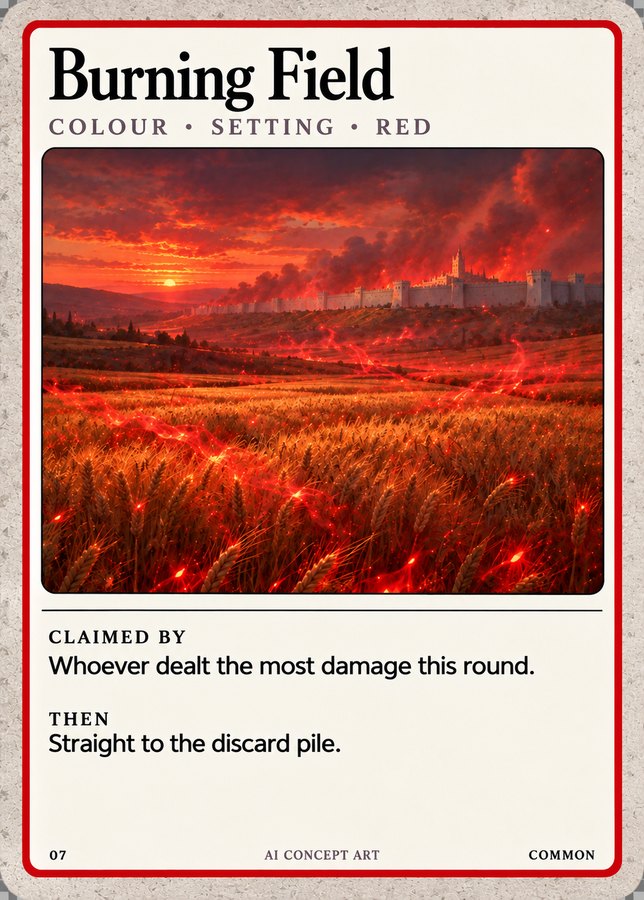
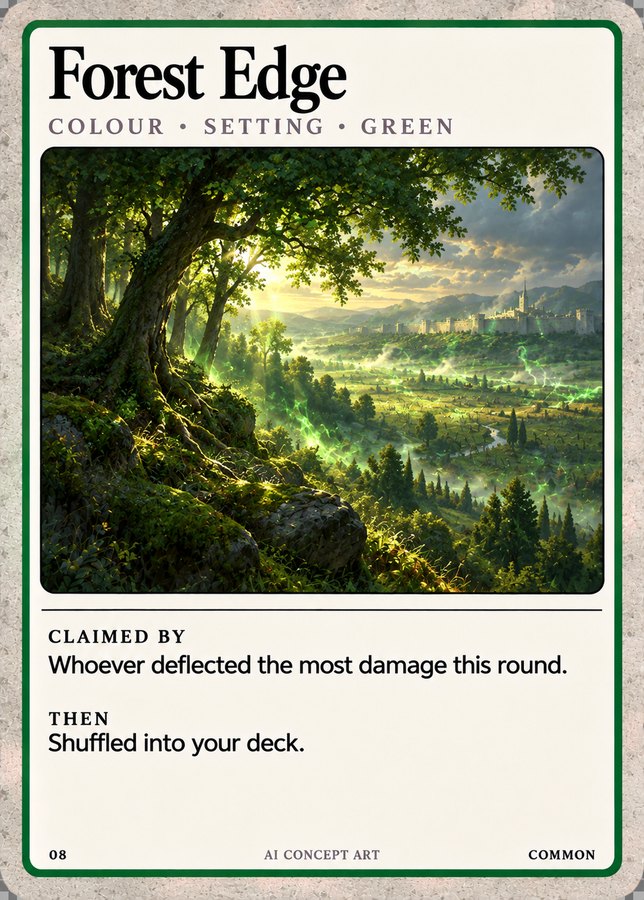
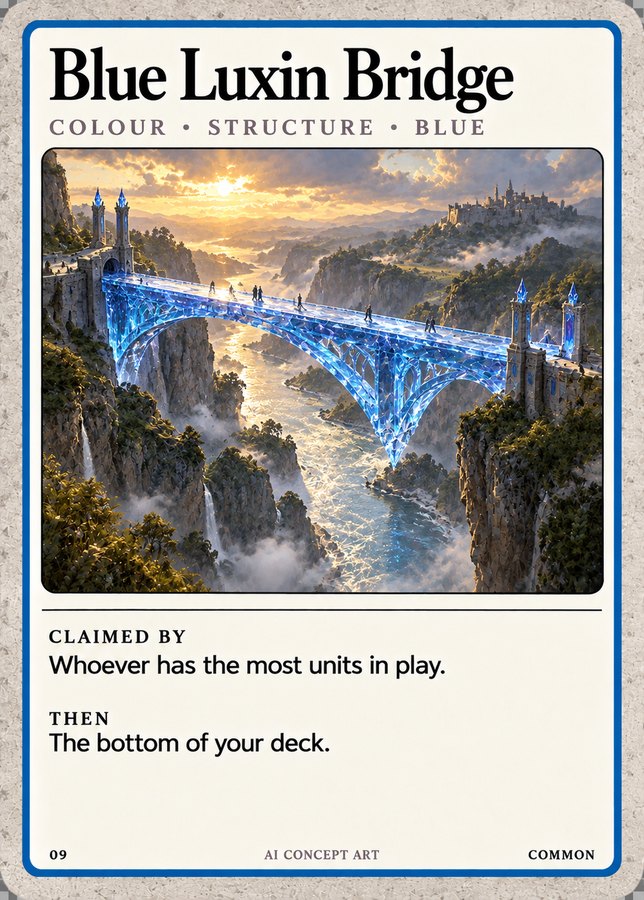
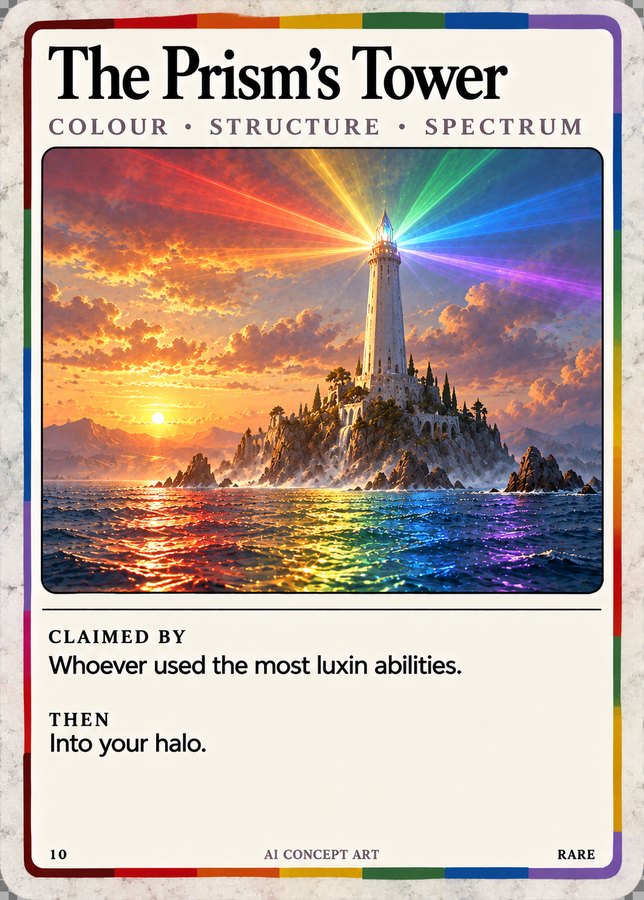
Colour cards are places, items and structures, in one colour, two, or the whole spectrum. Where a claimed card lands says what it is: a forest lasts, a burning field doesn't.
The colours behave the way Brent wrote them
Every colour's luxin acts like a material, and every drafter's temperament shapes how their colour plays.
Sub-red
Red
Orange
Yellow
Green
Blue
Super-violet
Paryl, chi, black and white come later, as rare colours worth building whole sets around. This is our reading of the books, and we'd want Brent to correct anything we've got wrong.
Every character in the series becomes a card
Named drafters, nameless units and wights, some fighting on the line and some holding it together from behind. Every unit can strike for its power without colour, and its luxin ability comes alive when its colour is in the light.
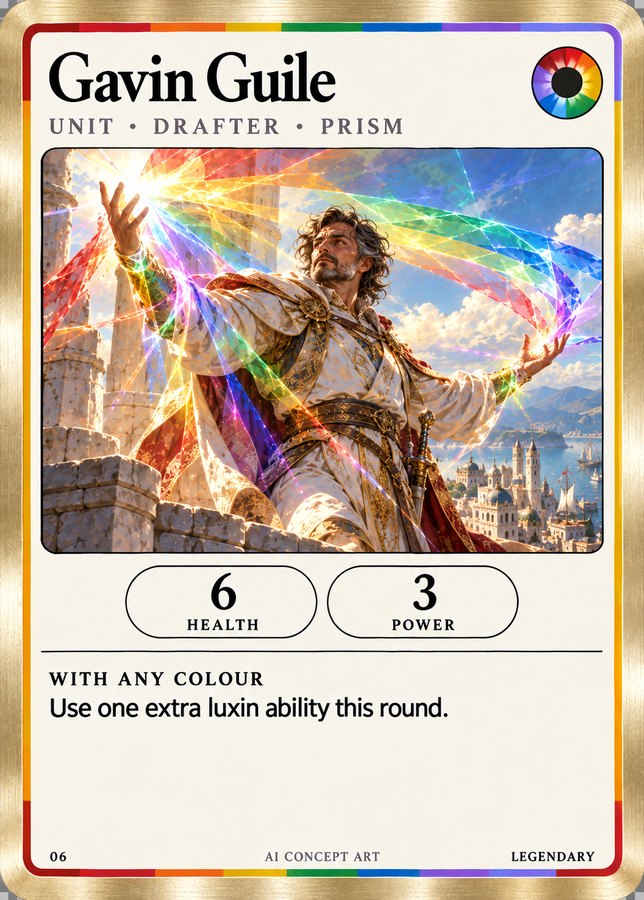
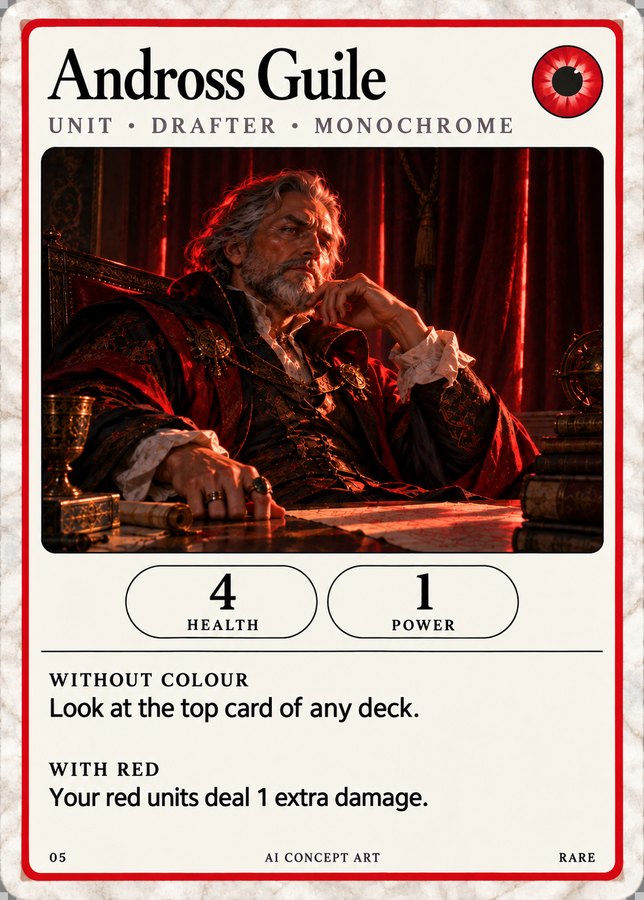
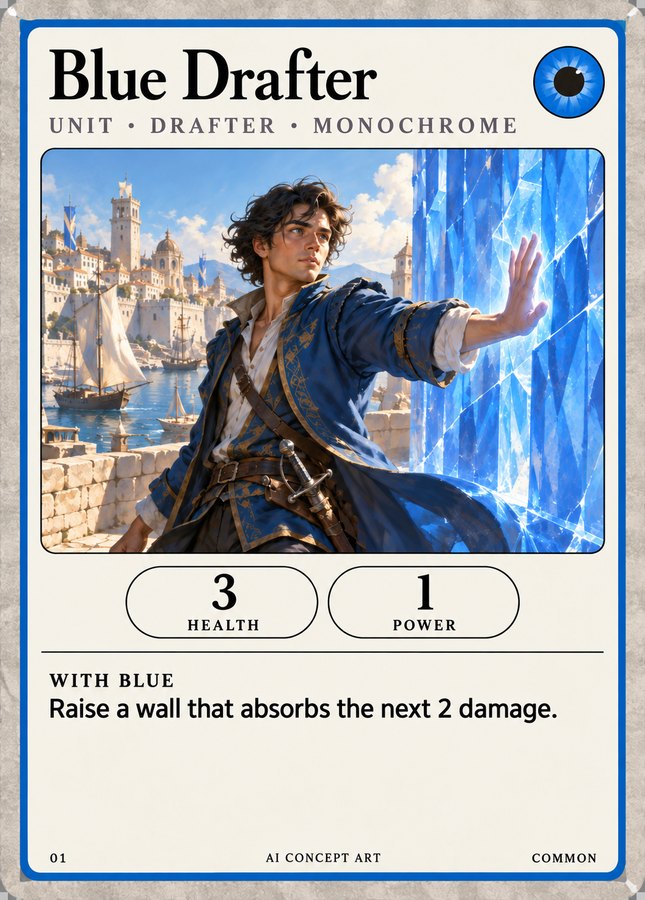
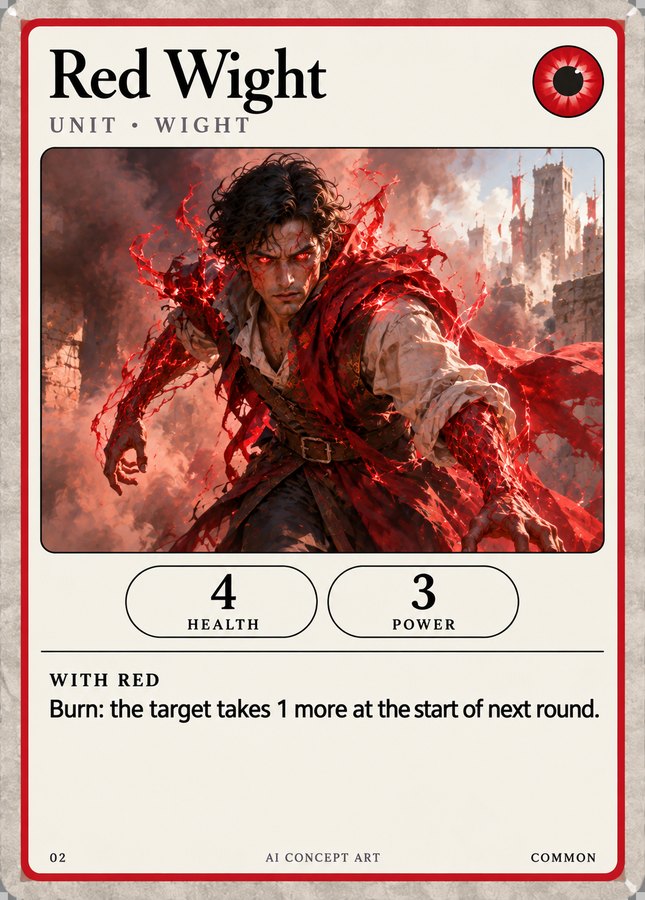
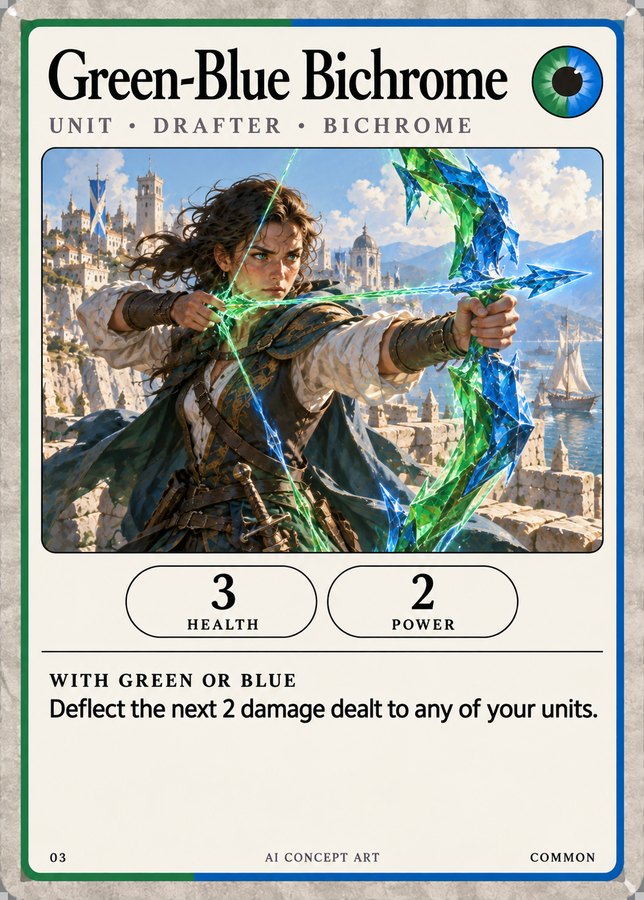
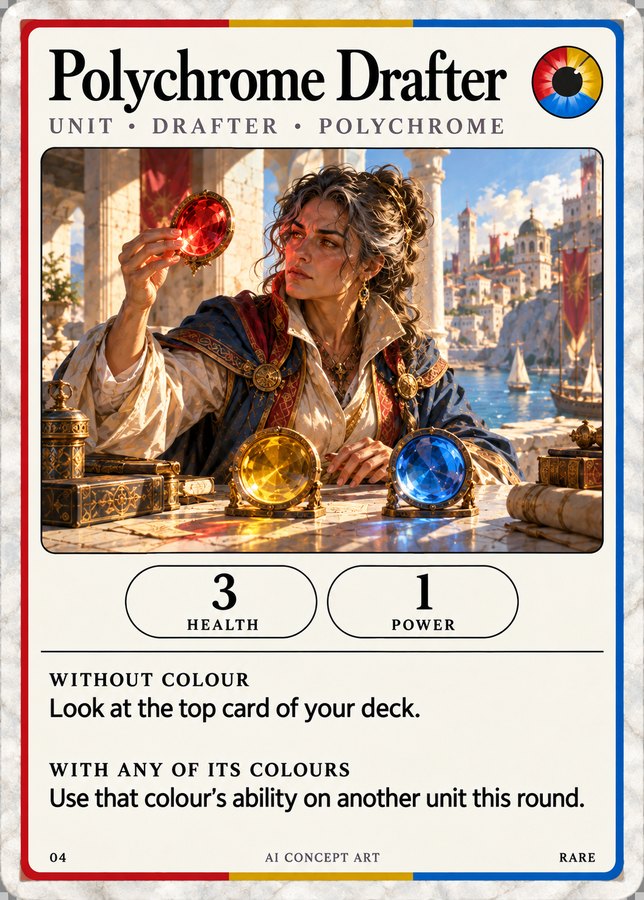
Concept cards for this deck only. Card art is AI concept art and would be replaced by commissioned artists. AI never touches the game design. Every number is a placeholder until playtesting.
A drafter dies in battle or burns out, and the game uses both
The war is violent
Units and luxin do real damage to the drafter behind them. Five books of war deserve combat that feels like it, so every drafter has a health pool and it goes down.
Power costs you later
Every halo pull buys power now and spends the deck you're standing on. You can lose a game you were winning by reaching too far.
We left Nine Kings for Brent
Nine Kings is the obvious thing to reach for. It's the card game inside the books, and readers have been designing its cards for years, including for Brent's own fan art contest.
We've kept it out of this design completely. A real Nine Kings should be Brent's game, built with him from the first rule. We'd love to make it with him, as a second game alongside this one.
We built the war around it
This game is the Seven Satrapies at war. Nine Kings stays what it is in the books: the game the characters play, waiting for its author.
A finished series with readers who already want the cards
The audience has already shown it wants to hold these cards. What it doesn't have yet is a game.
What we don't have yet
The books give us the first five sets, and the world has room for many more
The Black Prism
The Prism, the war in Tyrea, the first wights and the core spectrum.
The Blinding Knife
The Blackguard, new drafters and the war widening.
The Broken Eye, The Blood Mirror, The Burning White
The first five sets follow the books, from the first war to the last.
Sets the world already suggests
The satrapies. A set for each satrapy, from Tyrea to the Blood Forest, with its own drafters, places and colour cards.
The wights. Drafters who broke the halo, as a set of their own.
The rare colours. Paryl, chi, black and white, each big enough to build a set around.
Nine Kings, with Brent leading
The in-world card game made real, built on his vision. It stands apart from this game, and the two sit well side by side on a shelf.
Brent owns the world, and we design the game
Every character, place, colour and term in Lightbringer belongs to Brent Weeks and his publishers. What we bring is the engine: the halo, the colour contest, the draft and the rules that hold them together.
Zack Howe and Cole Beardsley
Two designers in Madison, Wisconsin. Every game we make is designed by both of us, start to finish.
HAVOC: Gen Zero, the card game we designed, funded on Kickstarter in under thirty minutes.
Zack is also a published novelist and a longtime reader of this series.
We'd love to talk this through with Brent
The first step is a conversation, with Brent on it from the start, because the questions worth asking are his to answer.
A call with Brent.
Prototype and playtest, once the direction is agreed.
Publisher or crowdfund, whichever fits how he wants it to reach readers.
Numbers come later. This is a conversation first.
Lightbringer: Breaking the Halo is a working title. Lightbringer, including all characters, places, names, colours and terms, is the property of Brent Weeks and his publishers. It appears in this deck solely to demonstrate a game concept. No published artwork from the series has been used, reproduced or imitated. Game mechanics, card architecture and rules text are original work of Pamplemoose Games LLC. Card art is AI concept art and would be replaced by commissioned artists. AI never touches the game design. No rights are claimed or implied. Not for distribution.